

blogs
Pasta Cookers: Types, Benefits, and How to Choose the Best One

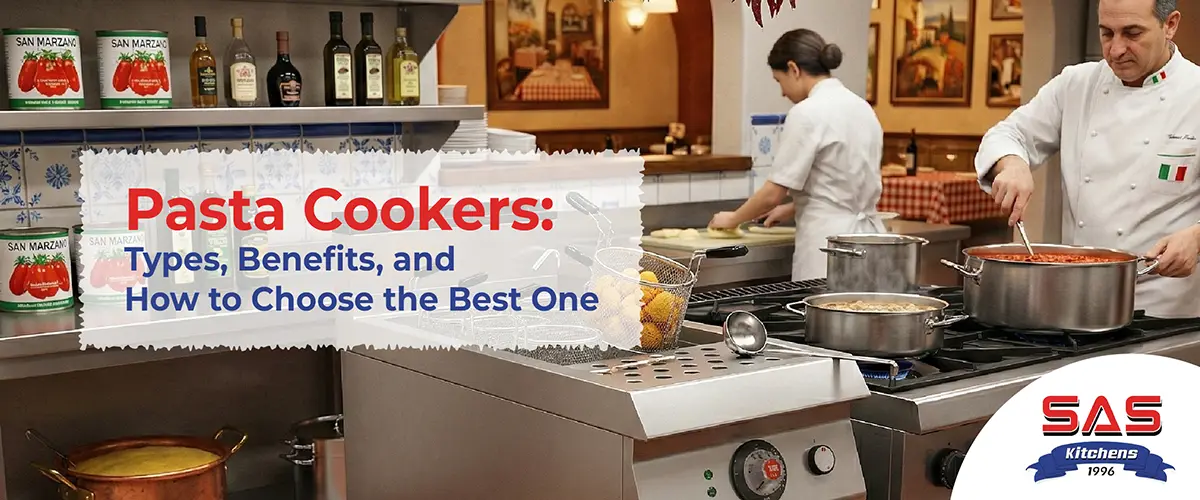
Cooking pasta for a few people is easy. Cooking it for a full restaurant during the dinner rush is a different job. Several orders can reach the kitchen within minutes, and each one needs the right cooking time. Large pots also take up valuable burner space. A commercial pasta cooker gives chefs a separate place for boiling pasta and helps them handle several portions at once. For restaurants, cafés, hotels and catering kitchens that serve pasta regularly, it can be a useful piece of commercial kitchen equipment.
Pasta Cookers: Types, Benefits, and How to Choose the Best One for Daily Restaurant Use
A pasta cooker is basically a boiling station made for regular restaurant use. It has a water tank and separate baskets that chefs can lift in and out as orders come in.
Instead of keeping two or three large pots on the cooking range, the chef can put spaghetti in one basket, penne in another and ravioli in a third. Each basket can be removed when its order is ready.
This leaves the main burners free for sauces, soups and other dishes. It also makes more sense in kitchens where pasta orders keep coming throughout lunch or dinner.
What Types of Pasta Cookers Can You Buy?
The size of your kitchen and the amount of pasta you sell will usually decide which type works best.
Countertop Pasta Cookers
A countertop pasta cooker is a sensible choice when space is tight. It can sit on a suitable work surface near a hot plate or the main cooking area.
Small restaurants, cafés, takeaway counters and food kiosks often do not need a large floor model. A countertop unit gives them a dedicated place to cook pasta without taking up much room.
Do check the tank and basket sizes. If five pasta orders regularly arrive together, a very small unit may quickly become inconvenient.
Floor-Standing Pasta Cookers
Restaurants that sell a lot of pasta usually need more capacity. Floor-standing models have larger tanks and can hold several baskets.
These cookers can become part of the main hot line alongside commercial ovens, commercial fryers, griddles & grills, and ranges & hotplates.
Having several baskets also means the chef does not have to mix different customer orders in one large pot.
Gas Pasta Cookers
A gas model may suit a restaurant where most of the cooking equipment already runs on gas.
Before buying, check the gas connection and where the cooker will sit. There should be enough room for staff to work around it without bumping into nearby equipment.
Electric Pasta Cookers
Electric pasta cookers come in both small and larger sizes. They can work well when the required electrical connection is already available near the cooking line.
Check the voltage and power requirement before ordering. This simple check can prevent extra electrical work later.
Why Use a Pasta Cooker Instead of a Large Pot?
A large pot can certainly cook pasta. The difference becomes noticeable when the restaurant gets busy.
- Keep burners available: You do not need several pots taking over the cooking range.
- Separates customer orders: Each basket can hold a different portion.
- Handles different pasta: Penne, spaghetti and ravioli can cook separately.
- Makes draining easier: Staff can lift the basket rather than carry a heavy pot of boiling water.
- Cooks more than pasta: Many kitchens also use these cookers for noodles and vegetables.
A restaurant that sells only a handful of pasta dishes may manage with pots. Once pasta becomes a regular part of daily orders, a separate cooker can make the job easier for the kitchen team.
Where Does a Pasta Machine Fit In?
A pasta machine and a pasta cooker are not the same thing.
The pasta machine rolls, cuts or shapes dough. The pasta cooker boils the pasta after it has been made.
Restaurants making fresh tagliatelle, fettuccine or ravioli may use both. Fresh pasta often cooks faster than dried pasta, so chefs need to watch each portion carefully.
The pasta machine can stay in the food preparation equipment area with commercial mixers and dough handling equipment. The cooker normally sits with the hot cooking equipment.
What Should You Check Before Buying a Pasta Cooker?
Do not start by looking for the biggest model. Start with your own kitchen.
- Count Your Busy-Hour Orders
Look at how many pasta dishes you sell when the restaurant is full.
If two or three portions are normally cooked together, you may not need a large unit. If six or eight orders can arrive within minutes, extra baskets will be useful.
- Measure the Available Space
Measure the place where you want to put the cooker.
Do not measure only the machine itself. Staff need room to stand in front of it, remove baskets and clean around the unit.
- Check the Basket Size
Basket size matters just as much as tank size.
Smaller baskets work well for individual portions. More baskets allow the chef to keep several orders separate during busy periods.
- Check Water and Drainage
A pasta cooker needs plenty of water, and that water has to go somewhere when the tank is emptied.
Check the water and drain points before installation. If they are too far away, you may need additional hardware & plumbing work.
- Check the Power Source
Decide whether gas or electric suits your existing kitchen.
Choosing equipment that matches the connections already available can make installation much simpler.
- Do Not Forget the Steam
Boiling water produces steam throughout service. Check where the cooker will sit in relation to exhaust hoods & canopies and other commercial ventilation & environmental control equipment.
- Look at Daily Cleaning
The cooker will need cleaning every day, so look at the inside of the tank, drain position and removable parts before buying.
Simple access can save staff time at the end of a long shift. It is also worth checking whether cooking line parts and other spare parts & components are easy to source when required.
What Else Does a Pasta Station Need?
The pasta cooker is only one part of the station. Think About everything the chef needs from the moment an order comes in until the plate leaves the kitchen.
Sauces may be kept on a hot plate or prepared using boiling pans & kettles. Fresh pasta may require a pasta machine, while dough preparation can involve commercial mixers.
Cold ingredients such as cream, cheese, vegetables and prepared sauces need to stay nearby. Undercounter chillers & freezers can be useful because chefs can reach ingredients without leaving their station. Larger kitchens may use upright chillers & freezers for bulk storage.
Once service ends, baskets, utensils and containers need washing. Commercial sinks & wash stations and commercial dishwashers can handle this part of the job.
A nearby work table & cabinet also gives staff space for plating and storing the tools they use most often.
Finding the Right Pasta Cooker at SAS Kitchens
There is no reason to buy a six-basket cooker if your café sells ten pasta dishes a day. In the same way, a small countertop model will soon become frustrating in a restaurant where pasta is ordered every few minutes.
Start with the numbers. How many pasta orders do you get during your busiest hour? How many portions do you need to cook together? How much room is available? Do you already have the required water, drainage, gas or electrical connections?
SAS Kitchens supplies commercial kitchen equipment for restaurants, hotels, cafés, bakeries and catering businesses. Along with pasta cookers, businesses can look at related cooking, food preparation, refrigeration, washing and ventilation equipment when setting up or changing their kitchen.
The right pasta cooker should suit the way your kitchen actually works. Check the tank, baskets, available space and connections rather than choosing only by price or size.
FAQs
Can you cook noodles in a pasta cooker?
Yes. Many kitchens use pasta cookers for noodles, ravioli, vegetables and other foods that need boiling.
How many baskets should a pasta cooker have?
It depends on how many separate portions your kitchen normally cooks during busy hours.
Does a pasta cooker need a drain?
A drain is useful because the cooking water needs to be emptied and changed regularly.
Can a small café use a countertop pasta cooker?
Yes. If you have limited floor space and don’t need to run huge orders, a countertop model is a good option.
Is a pasta machine the same as a pasta cooker?
No. A pasta machine shapes or cuts pasta dough. A pasta cooker is used to boil the pasta.